The system that plans every batch so managers stop putting out fires.
Goodwill Pharma runs three kinds of production: their own medicines, their own supplements and contract manufacturing for other companies. The plan for all of it lived on paper, and half of it never made it off the paper. Cockpit takes the sales plan and turns it into a production plan, months ahead, for every product and every batch.
See it in action
Three ways to read the same plan.
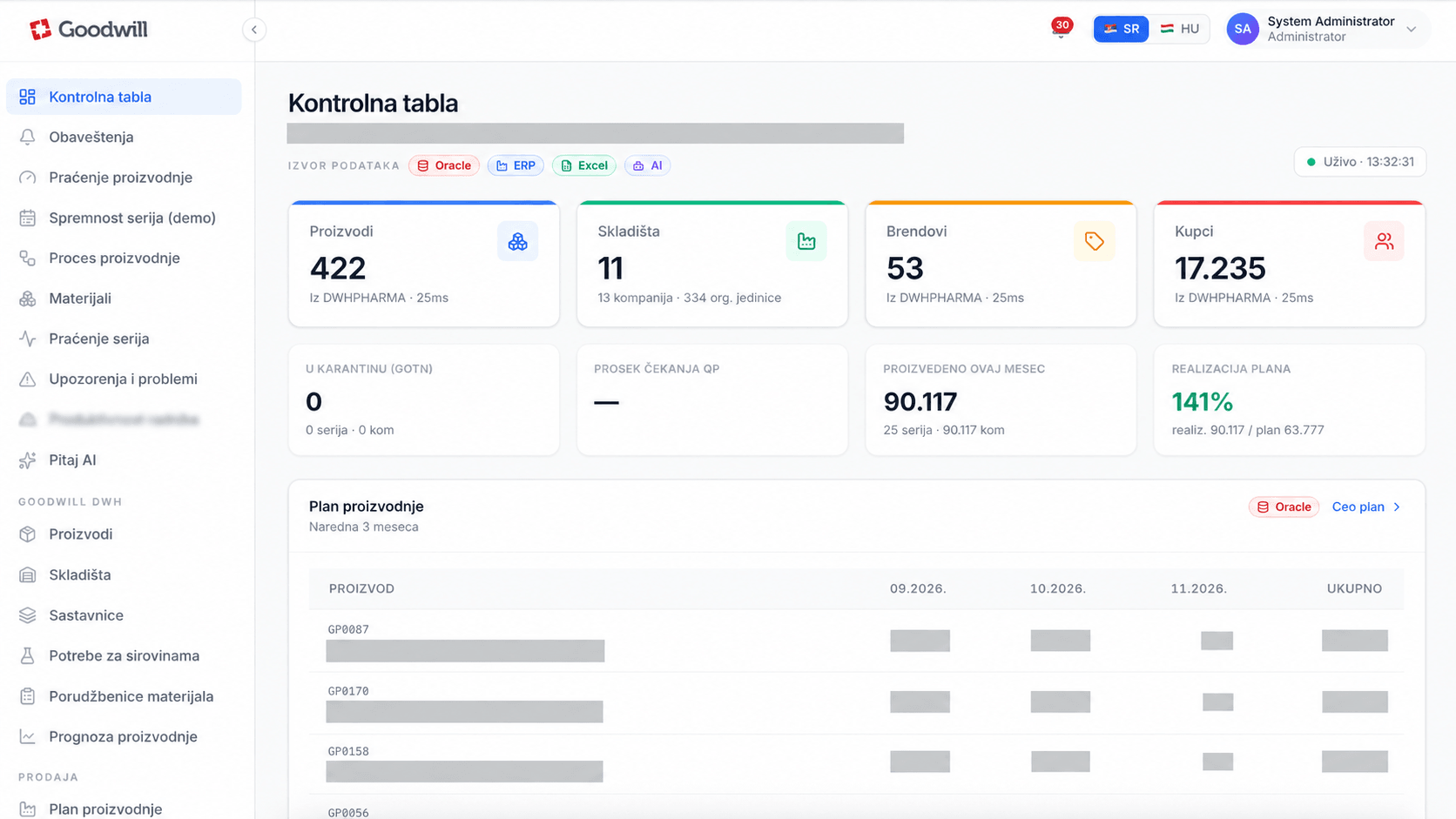
What the factory is doing
Products, warehouses, batches produced this month and plan against actual, live from the ERP.
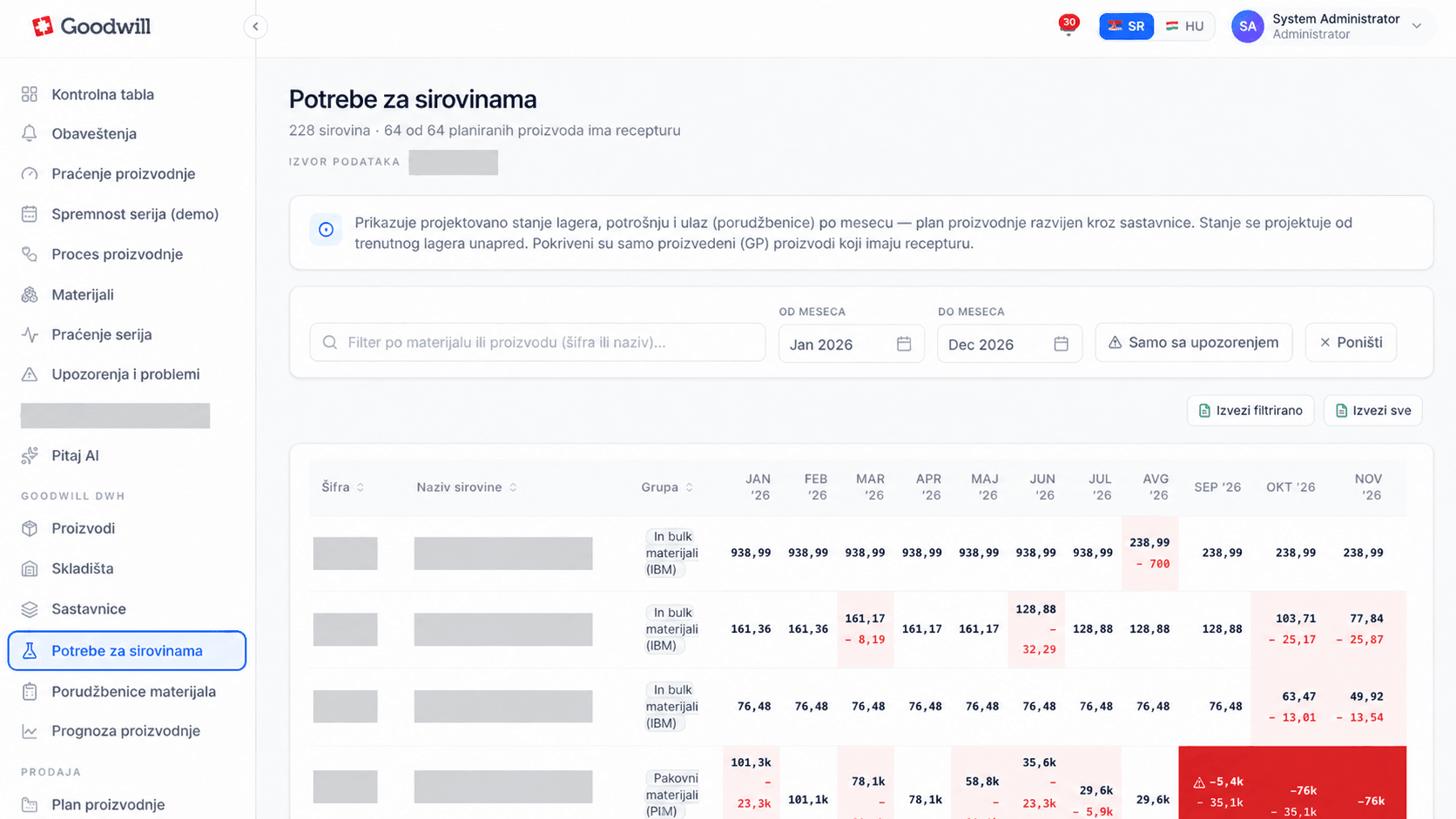
What will run out
Projected stock of every raw material, month by month. Red means a shortage before it happens.
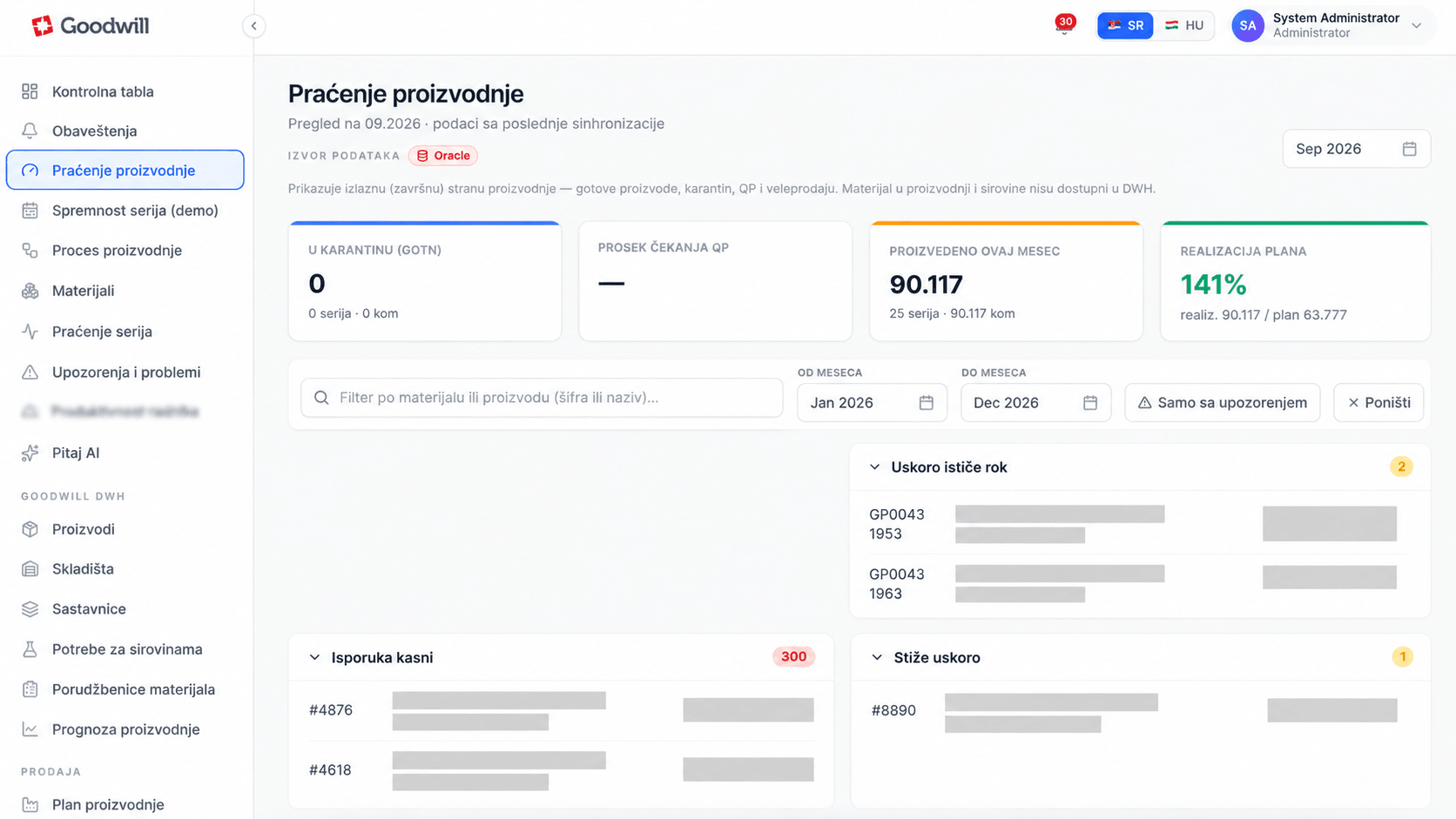
What needs attention
Expiry dates, late deliveries and batches behind plan, all on one screen before they become urgent.
By the numbers
What Cockpit keeps track of.
The transformation
From paper and Excel to one production plan.
Before
Production was planned on paper. When someone needed to filter or compare anything, the paper was retyped into Excel. Half of it never got that far.
There was no way to see whether a batch was on time, which line was overloaded or what the next month needed. Nobody could analyse a stack of paper.
Managers spent their days putting out fires. There was no room left for improving anything.
Now
Cockpit reads the sales plan from SKUP and turns it into a production plan: what to make, how much, on which line, in which month.
Each batch has a recipe, a quantity and a status. Done or not done, visible on one screen.
The people who used to chase paper now work on the production itself: new products, better processes, where to source materials from.
What else we built them
Beyond planning, three things production uses every day.
They needed the plan to follow what sales had sold
Plan tied to the sales plan
When sales commits to a quantity for the months ahead, Cockpit works out what production has to deliver each month, for every product. The two plans stop drifting apart.
They needed today's numbers, not last week's
Live from the ERP
Cockpit reads the company's Oracle data warehouse and ERP directly, so the plan, the stock and the batches are always current. Nothing is retyped, in Serbian or in Hungarian.
They needed to know whether the line was keeping pace
Productivity against time norms
Each product gets a time norm. The next module, now in progress, compares it with actual time per batch, so a delay shows up while there is still time to react.
THE RESULT
A factory that plans instead of reacts.
The hardest part was not the software. It was getting a team used to Excel to stop asking for an export. Once they did, the plan started living in one place, and the fires stopped.